Success story · Analyst roles · LinkedIn networking
How Girish secured an analyst role at Savills in six to eight weeks
After seven to eight months of searching, Girish combined personalised LinkedIn outreach with consistent follow-up to secure an analyst role at Savills.
By How to Job

Seven to eight months. Still searching.
Girish had spent seven to eight months applying through the usual channels without securing the role he wanted. With How to Job, he added a more deliberate approach: clear company targets, relevant conversations and consistent follow-up.
Approximately six to eight weeks after putting that approach into practice, he secured an analyst role at Savills. The change started with how he organised his search and the people he chose to reach.
Watch the full conversation with GirishGirish's search at a glance
- Searching before the change
- 7–8 months
- Senior contacts per target company
- 3 people
- Contacts, applications and follow-ups
- One tracker
- From the new approach to a role
- 6–8 weeks
Timeframes are approximate and describe Girish's individual experience.
Every contact. Every follow-up. One place.
Girish maintained a spreadsheet for contacts, applications and follow-ups. Keeping a record helped him decide what to do next, instead of relying on memory.
An accepted connection could lead to a first message. A useful reply could become a conversation to develop. Reviewing the record meant seeing which opportunities were moving forward and which needed attention.
- Company + contact
- Who is relevant?
- Last conversation
- What did you learn?
- Application stage
- Where does it stand?
- Next action + date
- What happens next?
The same principle, in How to Job+ today
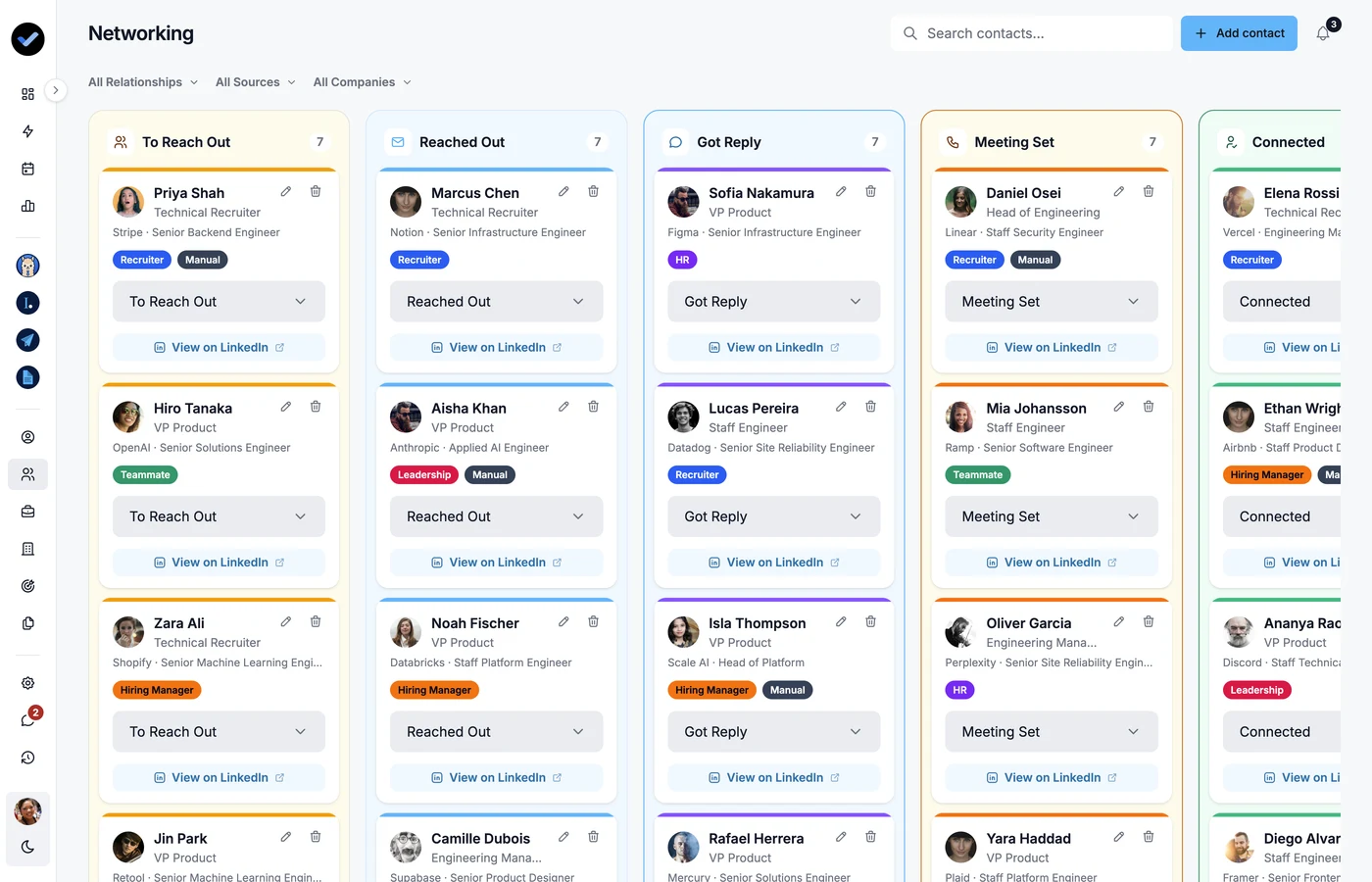
Girish used a spreadsheet. Today, How to Job+ brings similar organisation into a platform: a weekly roadmap, contacts grouped by stage, and applications tracked from saved through to offered.
Pair those records with coaching to review your targets, messages and sticking points. A useful dashboard should make the next action easier to see.
Three people. More perspective.
Girish approached three senior people at each target company. That created more possible conversations and a broader view of the team than relying on one person to reply.
Those conversations were also a way to learn about culture and fit. The principle is relevance: choose people whose work connects to your interests, and keep applying for suitable roles alongside your outreach.
Relevant people.
Different perspectives.
Make it personal. Make it easy to answer.
Girish personalised his connection requests with custom notes. He used conversations to understand team culture, communication and the qualities people valued at work.
For your own message, explain why that person's experience interests you and ask a focused question. A specific reason to connect gives someone a clearer starting point for a reply.
An analyst role at Savills.
After approximately six to eight weeks, Girish secured his role at the real estate consultancy. His story brings together three practical habits: keeping an organised record, reaching relevant people and personalising each approach.
The useful starting point for your own search: know who you are contacting, why they are relevant and what you will do next.
Common questions
How long did it take Girish to secure the role?
Approximately six to eight weeks after implementing the approach with How to Job, following seven to eight months of searching without securing the role he wanted.
Should I contact exactly three people at every company?
Girish approached three senior people per target company. That describes his approach, rather than a fixed rule: choose people whose work and experience are relevant to the role you are exploring.
Did networking replace job applications?
No. Girish tracked both applications and contacts. Conversations supported his understanding of employers alongside the formal application process.
Do I need to use a spreadsheet?
Girish used a spreadsheet. How to Job+ now offers tools to organise contacts, applications and weekly actions. The useful habit is keeping a reliable record and acting on it.
Will I get the same result in six to eight weeks?
This is Girish’s individual experience, not a guaranteed result. Your background, target roles, the market and your application process will affect your timeline.
Your next chapter
Work out what your job search needs next
Use a free strategy call to discuss the roles you have tried, where you feel stuck and what to do next. We can explain how How to Job+ and coaching could support your search.